
Wildlife of Queen Elizabeth National Park, Uganda
7th - 9th February 2026

Hippos in the Kazinga Channel, Queen Elizabeth National Park, Uganda
The next stage of my excellent tour of Uganda (previous reports here and here) was a couple of days in the huge savanna reserve of Queen Elizabeth National Park. I’d visited before, twelve years ago, but that was without the superb guiding skills of Brian Lokutae and this visit was on another level… 20 species of mammal including 5 carnivores, as well as dozens of different types of bird and one very cool snake!
Bird Life
Birding is Brian's passion and he was able to locate species from a fleeting call as we drove past, or just by recognising their preferred habitat requirements. I could easily have spent the whole trip just photographing the birds, many of which were new to me despite several previous visits to the region.
As you might expect, the most impressive were the raptors, with various different eagles, falcons, a harrier and five species of vulture... including a couple of dozen scrapping over what looked like the remains of a hippo (presumably thanks to the large male lion resting in a tree nearby!). There's a video of the vultures here...

White-backed (Gyps africanus) and Ruppell's Griffon (Gyps rueppelli) vultures
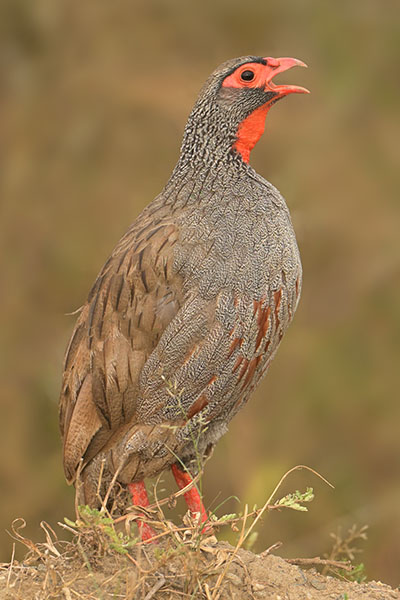


Red-necked Spurfowl (Pternistis afer)
Yellow-throated Longclaw (Macronyx croceus)
Papyrus Gonolek (Laniarius mufumbiri)
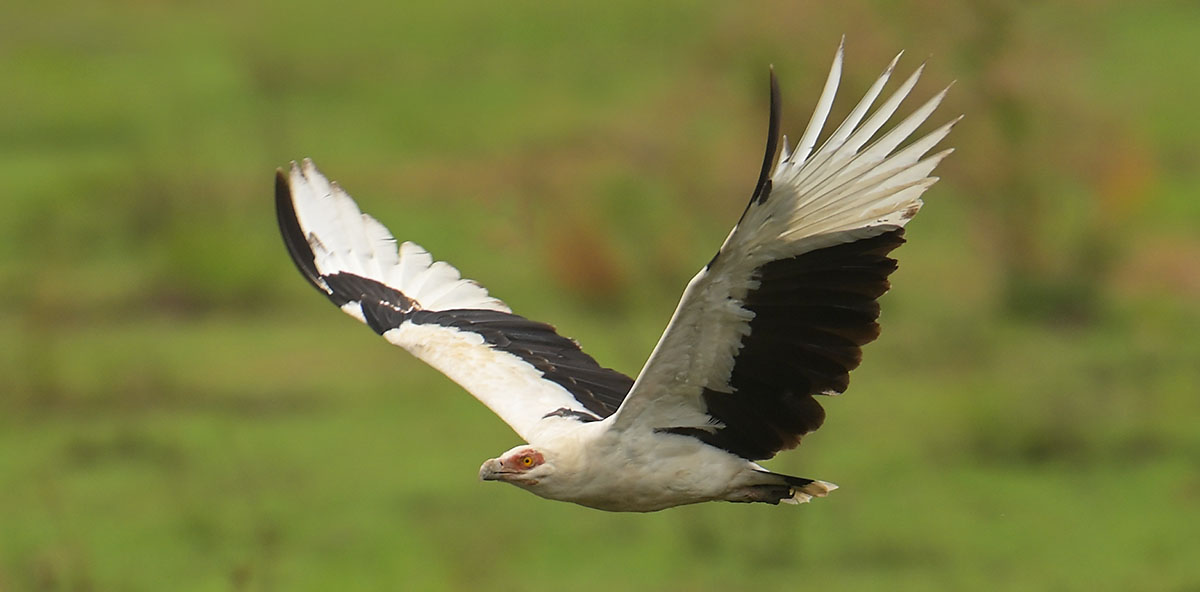
Palm-nut Vulture (Gypohierax angolensis)
Carnivores
The carnivorous mammals were even more impressive, with nine lions, a leopard, a hyena and several dozen mongooses. The leopard and most of the lions were settled in trees, which is probably how they keep cool in the heat of the day. Hyenas are mainly nocturnal, spending the sweltering daylight hours deep in a communal, underground den. The one we saw just after dawn was probably on its way home.
White-tailed mongooses are nocturnal too and largely solitary, so I was lucky to spot one in the torchlight beside my tent. Banded mongooses on the other hand are diurnal and live in large social groups that can number as many as 70. They will eat almost any kind of small animal from insects and spiders to small reptiles, birds and mammals. You can see a video of a group foraging here.

Leopard (Panthera pardus)


Spotted Hyena (Crocuta crocuta)
Banded Mongoose (Mungos mungo)

An irritable pair of young lions (Panthera leo) in a tree
Other Mammal Species
Of course there are many other types of mammal in Queen Elizabeth National Park. The most obvious are the savanna elephants which can be seen wandering throughout the area both individually and in large herds, particularly along the shores of Lake Edward and the Kazinga Channel where there are also large numbers of noisy, quarrelsome hippos.
During the day, the savanna is teeming with Ugandan kob, waterbuck, buffalo and warthog while at dawn or dusk, small herds of elusive giant forest hogs can be spotted in the bush. On our last morning, after very heavy overnight rain, we watched a beautiful yellow-winged bat feeding on the plentiful early-morning insects… presumably having been 'grounded' during the downpour.
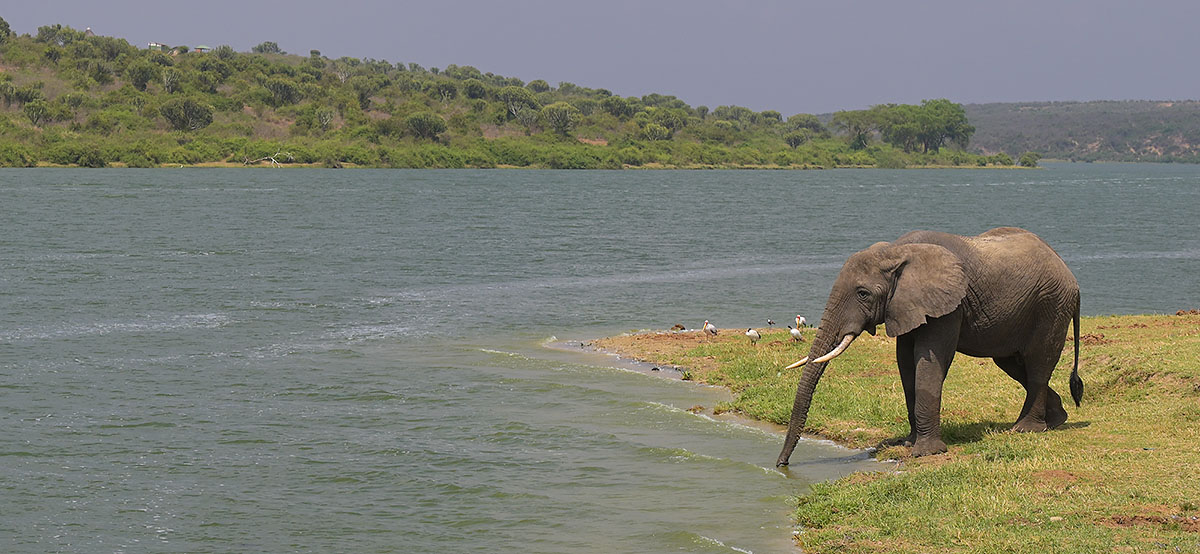
African Savanna Elephant (Loxodonta africana) at the Kazinga Channel


Warthog (Phacochoerus africanus)
Yellow-winged Bat (Lavia frons)
Giant Forest Hog (Hylochoerus meinertzhageni)
Boomslang
As we were driving along a rough track through the park, Brian spotted the beautiful boomslang snake below which had just caught a large frog. We stopped and spent about 20 minutes taking photos as it gradually consumed its prey. You can see the final stages in the video below.
Its very unusual for me to write a full report about just a couple of days of a trip, and it's testament to the superb wildlife of Queen Elizabeth National Park that I felt compelled to do so here (and to be honest there's a whole lot more I had to leave out!) Even if you're familiar with East African savanna parks, this one is always worth a visit, particularly if you're able to secure a top quality guide like Brian.
There are regular boat trips along the Kazinga Channel to watch the park's wildlife, but personally I wouldn't recommend them. The large boats are very noisy and crowded and go much too close to the animals, chasing elephants, hippos and waterfowl along the shore in an attempt to get close enough for selfies. Much better to stick with safari truck tours in the main park where vehicles keep to the main tracks and animals have the freedom to avoid them if they want to.
Uganda Trip Mammal Species Lists
(41 species, 11 primates, 6 carnivores)
Lake Victoria
(Report here...)Spotted-necked Otter (Hydrictis maculicollis)
Kibale Area
(Report here...)Red-tailed Monkey (Cercopithecus ascanius)
Grey-cheeked Mangabey (Lophocebus albigena)
Mantled Guereza (Colobus guereza)
Ashy Red Colobus (Piliocolobus tephrosceles)
L'Hoest's Monkey (Allochrocebus lhoesti, camera trap)
Chimpanzee (Pan troglodytes)
Olive Baboon (Papio anubis)
East African Potto (Perodicticus ibeanus)
Boehm's Bush Squirrel (Paraxerus boehmi)
Black-fronted Duiker (Cephalophus nigrifrons, eaten by an Olive Baboon)
Semuliki National Park
(Report here...)Red-tailed Monkey (Cercopithecus ascanius)
Grey-cheeked Mangabey (Lophocebus albigena)
Mantled Guereza (Colobus guereza)
Alexander's Bush Squirrel (Paraxerus alexandri)
Dwarf Scaly-tailed Squirrel (Anomalurus pusillus)
Giant Roundleaf Bat (Macronycteris gigas)
Bwindi Imprentrable Forest
(Report link will appear here...)Red-tailed Monkey (Cercopithecus ascanius)
Mantled Guereza (Colobus guereza)
L'Hoest's Monkey (Allochrocebus lhoesti)
Eastern Gorilla (Gorilla beringei)
Carruther's Mountain Squirrel (Funisciurus carruthersi)
Mgahinga National Park
(See Bwindi report...)Blue Monkey (Cercopithecus mitis)
Bushbuck (Tragelaphus scriptus)
Kisoro
(See Bwindi report...)Straw-coloured Fruit Bat (Eidolon helvum)
Queen Elizabeth National Park
(This report)Red-tailed Monkey (Cercopithecus ascanius)
Mantled Guereza (Colobus guereza)
Vervet Monkey (Chlorocebus pygerythrus)
Olive Baboon (Papio anubis)
Lion (Panthera leo)
Leopard (Panthera pardus)
Spotted Hyena (Crocuta crocuta)
White-tailed Mongoose (Ichneumia albicauda)
Banded Mongoose (Mungos mungo)
Warthog (Phacochoerus africanus)
Giant Forest Hog (Hylochoerus meinertzhageni)
Hippo (Hippopotamus amphibius)
African Savanna Elephant (Loxodonta africana)
African Forest Elephant (Loxodonata cyclotis)
Kob (Kobus kob)
African Buffalo (Syncerus caffer)
Waterbuck (Kobus ellipsiprymnus)
Bushbuck (Tragelaphus scriptus)
Topi (Damaliscus lunatus)
Yellow-winged bat (Lavia frons)
Lake Mburo National Park
(Report link will appear here...)Vervet Monkey (Chlorocebus pygerythrus)
Olive Baboon (Papio anubis)
Spotted Hyena (Crocuta crocuta, heard)
Marsh Mongoose (Atilax paludinosus, camera trap)
Dwarf Mongoose (Helogale parvula)
Warthog (Phacochoerus africanus)
Hippo (Hippopotamus amphibius)
African Buffalo (Syncerus caffer)
Waterbuck (Kobus ellipsiprymnus)
Bushbuck (Tragelaphus scriptus)
Topi (Damaliscus lunatus)
Impala (Aepyceros melampus)
Plains Zebra (Equus quagga)
Giraffe (Giraffa camelopardalis)
Yellow-winged bat (Lavia frons)

African Buffalo herd (Syncerus caffer) in Queen Elizabeth National Park